
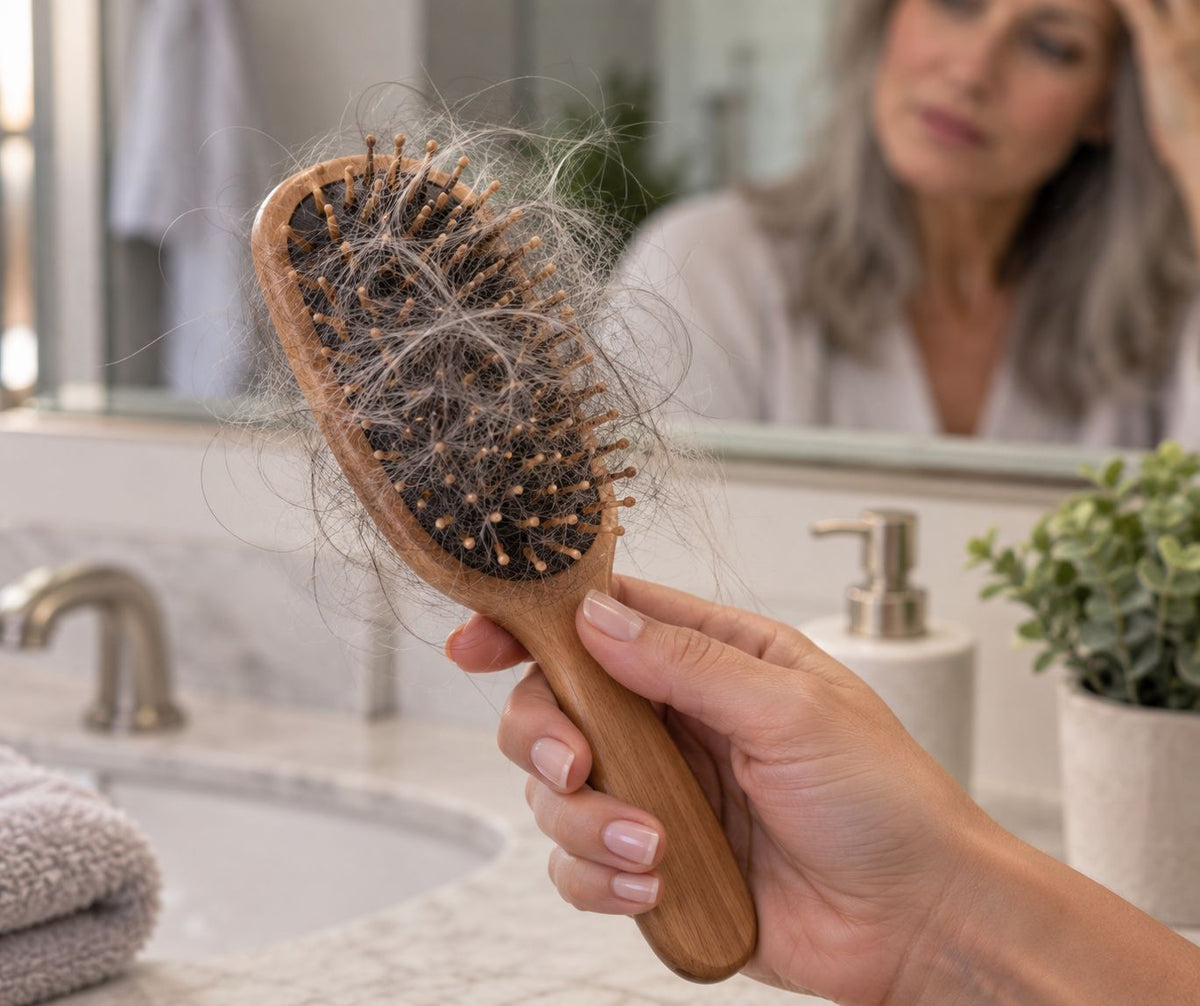
Menopausal shedding hits differently for every woman - some lose density, others just snap and break. One targets follicles, the other protects strands, but which one actually fixes your specific problem, and could you need both?
Key Takeaways
Hair growth serums are formulated to stimulate follicles and encourage new growth, while scalp treatment oils focus on nourishing and protecting the strands that are already there
Menopause-related shedding is driven mainly by falling estrogen levels, which can shrink follicles and shorten the hair's active growth phase
Ingredients like rosemary extract, peptides, and minoxidil are geared toward follicle stimulation, while coconut, argan, and pumpkin seed oils are better suited to strand nourishment and protection
Combining a follicle-focused serum with a strand-focused oil often addresses both thinning and breakage at once
Viviscal Pro, a marine-based system, has shown a 32% increase in terminal hairs after 3 months, illustrating how targeted formulas can support follicle health during menopause
Menopause has a way of changing hair almost overnight, leaving many women staring at their brush wondering what happened. Understanding the difference between a hair growth serum and a scalp treatment oil can make choosing the right product feel a lot less confusing, and a lot more effective.
Why Menopause Triggers Hair Shedding
Hormones drive much of what happens to hair, and menopause disrupts that system in noticeable ways. As estrogen levels decline, hair follicles spend less time in their active growth phase and more time resting or shedding, which is why so many women notice thinning around the part line or a fuller brush after washing. This shift also tends to shrink individual follicles over time, producing strands that look and feel thinner even before actual shedding increases.
The scalp itself changes too during this transition. Reduced circulation and slower cell turnover can leave follicles under-nourished, while drier skin and hair fibers become more prone to breakage. This combination of a stressed scalp and weakened strands is exactly why many women find themselves shopping for both a growth-focused treatment and a protective one, often unsure which problem to tackle first. Recognizing whether shedding stems from follicle slowdown or strand damage is the first step toward picking the right formula, a principle behind Vivandi's hair care systems.
Serums vs Oils: The Core Difference
At a glance, hair growth serums and scalp treatment oils might seem interchangeable, since both get applied to the scalp and both promise healthier hair. The real distinction lies in where each product does its work and what problem it's designed to solve.
How Serums Stimulate Follicles
Hair growth serums are lightweight, leave-in treatments built to penetrate the scalp and deliver active ingredients directly to the follicle. Their job is to wake up follicles that have slipped into a resting state, encouraging them to shift back into active growth. Many serums also target scalp conditions like irritation or excess oil that can interfere with healthy follicle function, making the scalp environment more hospitable to new growth over time.
How Oils Nourish and Protect Strands
Scalp treatment oils take a different approach, focusing on conditioning and protecting the hair that already exists. Rather than penetrating deep into the follicle to trigger new growth, oils coat and saturate the hair shaft, sealing in moisture and reducing the friction that leads to breakage. For menopausal hair, which often turns drier and more brittle as oil production slows, this protective layer can be the difference between hair that snaps easily and hair that holds its length and shine.
Ingredients That Actually Work
Not every serum or oil is created equal, and the ingredient list tells the real story about what a product can actually accomplish. Knowing which compounds target follicles versus which ones protect strands makes label-reading far more useful.
Follicle-Focused: Minoxidil, Rosemary, Peptides
Minoxidil remains the only topical treatment approved by the FDA specifically for female pattern hair loss, making it a standard reference point in many growth-focused serums. Rosemary extract has also gained attention as a natural alternative, with some research suggesting it performs comparably to a 2% minoxidil solution for improving scalp circulation and protecting follicles with antioxidants.
Beyond those two, several other ingredients show up consistently in serums built for menopausal thinning:
- Peptides, which support the structural proteins follicles need to produce strong new hair
- Saw palmetto, a natural DHT blocker that may help slow androgen-related thinning
- Niacinamide (vitamin B3), which supports scalp circulation and barrier health
- Caffeine and biotin, both commonly included to support follicle activity and hair structure
Strand-Focused: Coconut, Argan, Pumpkin Seed
Oils built for strand protection lean on a different set of ingredients, chosen for how well they coat and repair the hair fiber rather than how deeply they penetrate skin. Coconut oil is prized for its fatty acid content, which allows it to penetrate the hair shaft itself and reduce the protein loss that leads to dryness and snapping. Argan oil brings a rich supply of antioxidants, vitamin E, and essential fatty acids that smooth the cuticle and shield strands from daily damage like heat styling or brushing.
Pumpkin seed oil deserves particular mention for menopausal hair care, since it's rich in plant sterols that help support balanced DHT activity around the follicle, which can be especially useful for androgen-related thinning that often accompanies this life stage. Some scalp oil blends combine several of these ingredients, pairing pumpkin seed with rosemary, peppermint, or coconut to cover both nourishment and mild follicle support in a single product.
What Clinical Results Show
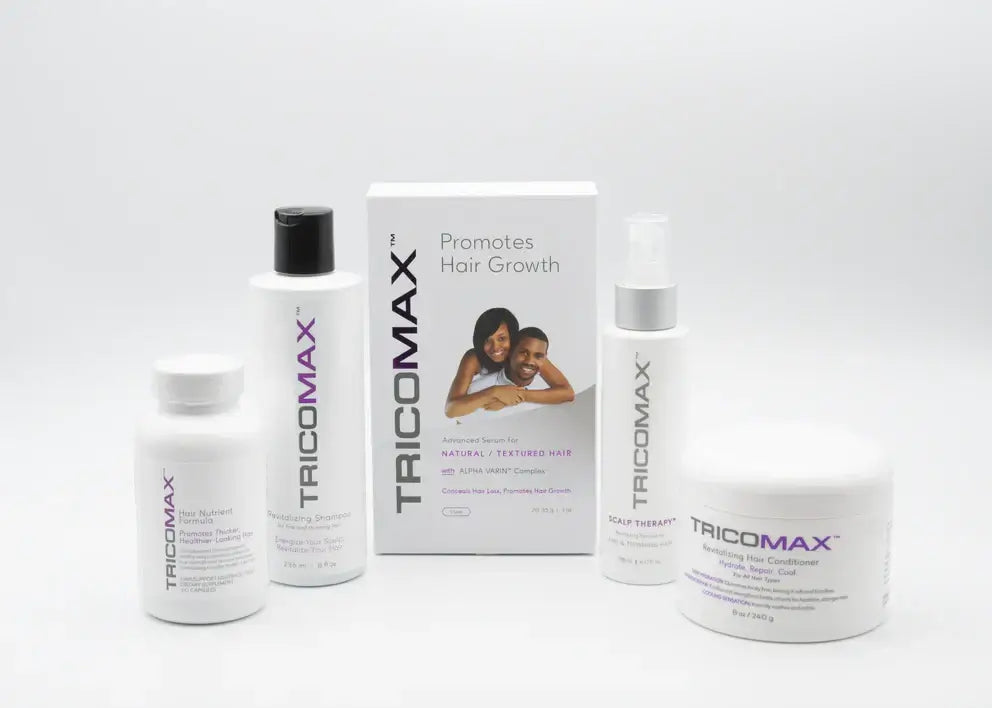
Timelines matter when evaluating any hair treatment, and patience tends to pay off more than product-hopping. Most scalp serums require consistent application for at least 8 to 12 weeks before visible changes in shedding or density appear, since hair growth cycles simply don't move faster than that regardless of formula strength. Tricomax, for instance, has shown reduced shedding within weeks, with hair density increasing by 47% after six months of continued use.
Systems that combine multiple product types often report stronger outcomes than single treatments alone. Viviscal Pro, a marine-based system that pairs an oral supplement with topical support, has been shown to increase terminal hairs by 32% after 3 months of use. These figures reflect what happens when a treatment is designed around the actual growth
cycle rather than promising overnight results, and they reinforce why realistic timelines matter more than flashy before-and-after photos.
Choosing - Or Combining - Both Approaches
Deciding between a serum and an oil often comes down to identifying which symptom feels most urgent. Some women notice visible scalp and part-line thinning first, while others deal primarily with dry, breaking ends. Either scenario has a clear product match, and many women eventually find they need both.
When Thinning Is the Main Concern
If a wider part, visible scalp, or noticeably reduced density is the main worry, a follicle-focused serum should take priority. Look for formulas containing minoxidil, rosemary extract, or peptides, and commit to daily application on clean, dry scalp for at least a couple of months before judging results. Thinning driven by hormonal shifts responds best to consistent, sustained use rather than occasional application.
When Breakage and Damage Dominate
When the bigger issue is brittle strands, split ends, or hair that seems to break before it ever gets the chance to grow long, a scalp treatment oil deserves the spotlight. Oils rich in coconut, argan, or pumpkin seed extract work best applied to the mid-lengths and ends, ideally before washing, to create a protective barrier against heat and mechanical stress. This approach won't necessarily speed up new growth, but it protects the length already achieved so gains from a growth serum aren't undone by daily breakage.
Building a Dual Routine
Many women find the most complete results come from using both product types in tandem rather than picking one over the other. A practical routine might look like this:
- Apply a hair oil to mid-lengths and ends before shampooing, allowing it to sit for at least thirty minutes to nourish and protect the strand.
- Wash and lightly towel-dry hair.
- Apply a hair growth serum directly to the scalp, focusing on areas where thinning is most noticeable.
Repeat this pattern several times a week, adjusting oil frequency based on how dry or oily the scalp tends to run.
This layered approach treats the follicle and the strand as two separate but connected problems, which mirrors how menopausal hair actually behaves. Consulting a specialist can also help fine-tune ingredient choices and application frequency based on individual scalp needs and shedding patterns.
Serums Target Growth, Oils Protect Strands
The clearest way to remember the distinction is this: serums work at the root, oils work along the length. Menopausal hair shedding rarely has a single cause, which is exactly why treating it with a single product type often falls short of expectations. Pairing a follicle-stimulating serum with a strand-protecting oil addresses both the biological shift happening at the scalp and the physical wear happening along the hair shaft.
For women ready to build a more complete routine, proven hair growth and scalp care systems offer a practical starting point for matching the right formula to each stage of menopausal hair change.

Leave a comment
This site is protected by hCaptcha and the hCaptcha Privacy Policy and Terms of Service apply.