
Turning 50 doesn't mean accepting thinning hair as inevitable. From DHT-blocking prescriptions to marine protein supplements that boost density by 32%, which treatment actually delivers results for your stage of hair loss?
Key Takeaways
-
Hair thinning after 50 is common and treatable, with options ranging from FDA-approved medications to nutraceutical and laser therapies that support regrowth.
-
By age 50, most men experience noticeable hair thinning, and hormonal shifts like declining estrogen play a major role in thinning for women after menopause.
-
Minoxidil and finasteride remain the only FDA-approved treatments for pattern hair loss, but marine protein supplements, laser devices, and plant-based actives offer proven support alongside them.
-
Vivandi Inc. offers clinically studied options like Viviscal Pro and Trichomax that target hair density and shedding through nutrient and botanical pathways.
-
Matching a treatment to the stage of thinning, rather than choosing at random, gives the best shot at visible, lasting results.
Turning 50 brings plenty of changes, and for many people, thinning hair is one of the more visible ones. Hair loss after 50 responds to treatment more often than people expect, whether the cause is hormonal, nutritional, or simply the natural slowing of the hair growth cycle. Understanding what drives thinning at this age makes it much easier to pick a treatment that actually works, rather than trying random products off a shelf. For those beginning their search, Vivandi Inc. has spent nearly two decades working alongside hair restoration professionals and clinics, offering perspective on which treatments hold up to scrutiny.
Thinning Hair Hits Most Over 50
Hair thinning after 50 is less an exception and more the rule. By this age, most men show significant hair thinning, and the trend starts well before that: two out of three American men notice some hair loss by their mid-thirties. Women face a similar reality, though the pattern often looks different, with thinning spread more evenly across the scalp rather than concentrated at the hairline.
This widespread experience means nobody going through it is alone, and it also means research and treatment options have matured considerably. Dermatologists, hair restoration clinics, and product developers have spent decades studying exactly why hair changes with age, which has led to a handful of treatments with real, measurable results. The rest of this guide walks through why thinning happens and which treatments have earned their reputation.
Why Hair Thins With Age
Age-related hair thinning rarely comes from one single cause. Instead, it usually results from a combination of hormonal shifts, slower cell turnover, and gradual nutrient depletion that adds up over the decades. Recognizing which of these factors applies helps narrow down which treatment path makes the most sense.
DHT and Hormonal Shifts
Dihydrotestosterone, better known as DHT, is a byproduct of testosterone that can shrink hair follicles in people who are genetically sensitive to it. As DHT levels climb or follicles become more reactive with age, hair strands grow thinner and finer until some follicles stop producing visible hair altogether. This is the driving force behind androgenetic alopecia, the most common form of pattern hair loss in men.
Women experience a related but distinct hormonal shift, especially around menopause. Declining estrogen levels disrupt the balance that once protected hair follicles from androgens like DHT, which is why female pattern hair loss so often becomes noticeable in the years surrounding menopause. Ingredients such as saw palmetto and green tea extract are sometimes used as natural DHT blockers, helping maintain hormonal balance without a prescription.
Nutrient Gaps That Speed Shedding
Hair follicles are demanding tissues, requiring a steady supply of vitamins, minerals, and amino acids to keep producing strong strands. Gaps in nutrients like iron, vitamin D3, and biotin can lead to excessive shedding and slower regrowth, often showing up first as thinning along the sides and back of the scalp. This kind of nutritional shortfall becomes more common with age, whether from changes in diet, absorption, or overall metabolism.
-
Iron deficiency can starve follicles of the oxygen they need to stay in the growth phase.
-
Low vitamin D3 has been linked to slower regrowth cycles.
-
Insufficient biotin weakens the hair shaft, making strands more prone to breakage.
FDA-Approved Regrowth Medications
For decades, two treatments have stood out as the standard for pattern hair loss: minoxidil and finasteride. Both have gone through the rigorous approval process required by the FDA, and both come with a substantial track record of clinical use.
How Minoxidil Stimulates Regrowth
Minoxidil works by widening blood vessels in the scalp, which improves circulation to hair follicles and helps prolong the growth phase of each hair strand. It is available as a topical foam or liquid, and for women, it remains the only FDA-approved drug specifically for treating female pattern hair loss. Applied consistently, it can help thinning hair look fuller by encouraging both regrowth and thickness in existing strands.
Results take patience. About 40% of men using topical minoxidil see growth within three to six months, and an oral prescription version can take six to twelve months before changes become noticeable. Sticking with the routine matters more than the delivery method, since stopping treatment typically causes any regrowth to reverse over time.
How Finasteride Lowers DHT Levels
Finasteride takes a different approach, working from the inside by blocking the enzyme responsible for converting testosterone into DHT. Since DHT is the hormone most responsible for shrinking sensitive follicles, lowering its levels helps protect existing hair and, in many cases, encourages some regrowth. This oral medication is approved specifically for androgenetic alopecia in men, and the results speak for themselves: roughly 90% of users experience either new growth or a slowdown in further loss.
Because finasteride works on hormone levels throughout the body, it requires a prescription and a conversation with a physician about suitability, especially for anyone weighing other hormone-sensitive health conditions. Combining it with topical treatments, like minoxidil, is a common strategy for people looking for a more complete approach to hair restoration.
Beyond Prescriptions: Proven Alternatives
Several alternatives to prescription medication have built solid evidence behind them, appealing to people who prefer to skip the pharmacy altogether. These options can work well on their own or alongside medications for a layered approach to hair restoration.
FDA-Cleared Laser Devices for Follicles
Low-level laser therapy, often shortened to LLLT, uses light energy to stimulate hair follicles, improve blood flow, and calm inflammation in the scalp. Devices cleared by the FDA for home or clinical use have shown promise for both men and women dealing with androgenetic alopecia. Because laser therapy is drug-free, it appeals to people looking for a non-invasive option that fits into a regular grooming routine, whether through a comb, cap, or helmet-style device.
Marine Protein and Nutraceutical Support
Supplements built around marine protein complexes have earned attention for their ability to support the hair growth cycle from within. Viviscal Pro, for example, combines a marine protein complex called AminoMar with biotin, zinc, apple extract, and vitamin C, nutrients tied directly to healthy hair structure. Clinical study has shown this formula produces a 32% increase in the number of terminal hairs and a nearly 40% decrease in hair shedding in just three months.
Nutraceutical support like this works best as a long-game strategy rather than a quick fix, since hair growth cycles naturally unfold over months. Consistency, paired with a diet rich in protein and micronutrients, tends to produce the most noticeable improvements in thickness and shedding reduction.
Plant-Based Actives and Growth-Factor Blends
Botanical ingredients have carved out a serious role in modern hair care, particularly for people wanting drug-free options. Trichomax, a drug-free formula built around rare Amazonian plant extracts, has been shown to reduce shedding within 8 to 12 weeks. Its vegan blend of Epimedium and Polygonum extracts works by activating dormant follicles through the Wnt/β-catenin pathway, a mechanism tied to hair growth signaling, boosting hair density by 47% and improving texture in 89% of users within four months.
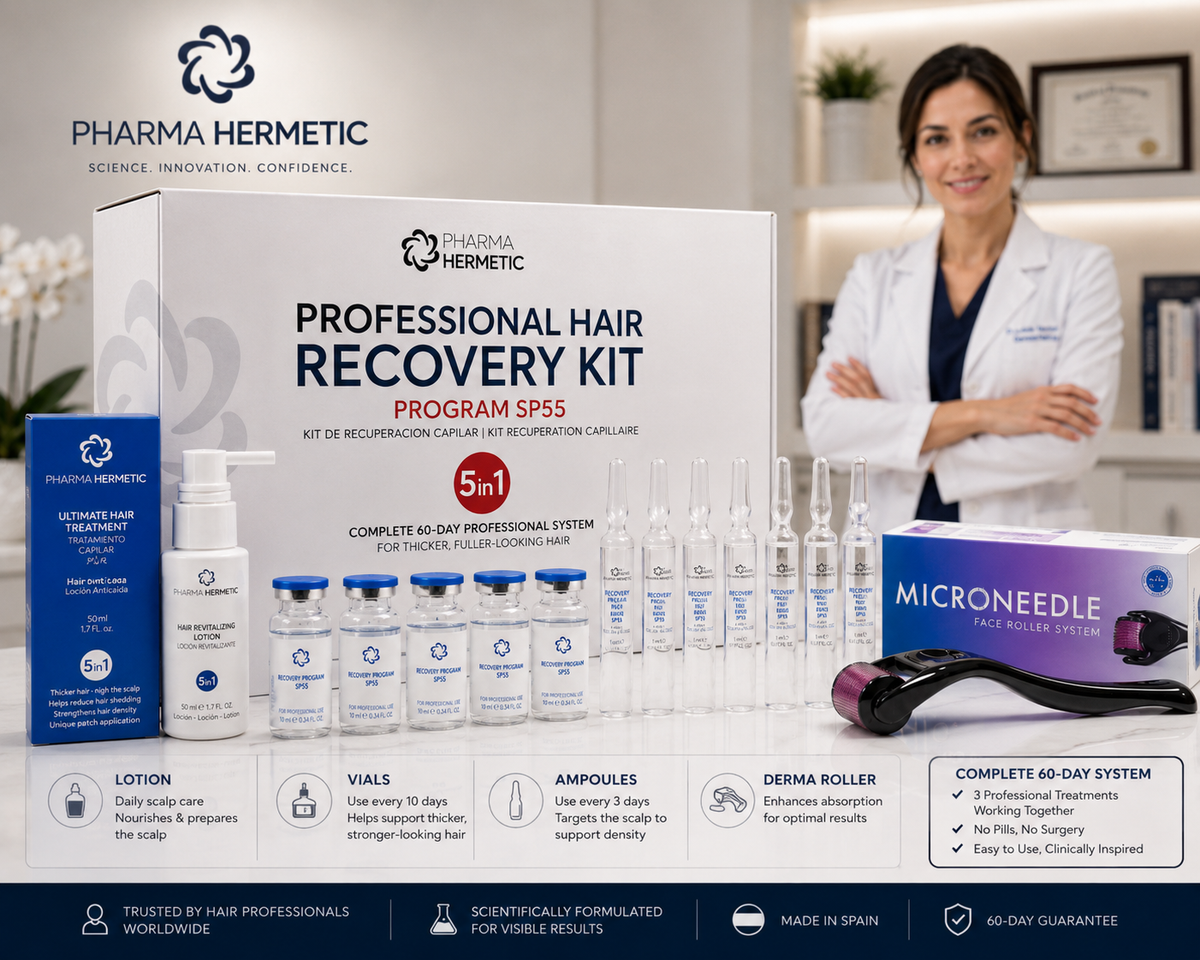
Other formulations combine growth-factor blends with vitamins and 5-alpha reductase inhibitors, which work similarly to finasteride but through topical rather than oral delivery. Systems that pair a lotion, ampoules, and a sulfate-free shampoo tend to work best in the earlier stages of thinning, before bald spots become fully established. Those considering a complete regrowth routine can look into the professional hair recovery kit, a multi-week scalp therapy system. Miracle fruit seed oil is another plant-derived option worth noting, prized for penetrating the hair shaft to repair damage and restore elasticity, which supports overall hair health even if it works on manageability rather than regrowth directly.
Matching Treatment to Your Stage
Choosing the right treatment starts with an honest look at how far thinning has progressed. Early-stage thinning, where hair still shows some density but strands feel finer or shed more than usual, tends to respond best to topical treatments, nutraceuticals, and 5-alpha reductase inhibitor formulas applied before follicles miniaturize completely.
For more advanced thinning, especially where bald patches have started to form, a layered strategy often makes more sense:
-
Start with an FDA-approved medication, such as topical minoxidil, to reestablish blood flow and extend the growth phase.
-
Add a DHT-focused option, whether prescription finasteride or a topical 5-alpha reductase inhibitor system, to address the hormonal driver of miniaturization.
-
Support the scalp environment with nutraceuticals and marine protein complexes that strengthen the strands already growing back.
-
Consider a laser therapy device for an additional, drug-free boost to circulation and follicle activity.
Patience matters more than most people expect. Nearly every treatment path, from minoxidil to plant-based actives, takes a minimum of two to four months before changes become visible, and often longer for full results. Tracking progress with photos taken under the same lighting every few weeks makes it much easier to judge whether a treatment is working rather than relying on memory alone.
Regrowth Is Achievable After 50
Age-related thinning feels discouraging, but it responds to treatment more reliably than many people assume. Whether the answer turns out to be a well-studied medication, a laser device, a marine protein supplement, or a plant-based formula, the common thread is consistency paired with a treatment matched to the actual stage of hair loss. People experiencing thinning hair have real options to consider rather than accepting it as an unavoidable part of aging.
Anyone ready to start should talk with a dermatologist or hair restoration specialist about which combination fits their hormone levels, health history, and lifestyle. For a well-rounded place to begin, consider visiting Vivandi Inc. to review the available products.


Leave a comment
This site is protected by hCaptcha and the hCaptcha Privacy Policy and Terms of Service apply.